How do you choose vehicle wraps for a business fleet?
A fleet has three options: vinyl lettering (logo and contact details), a partial wrap (part of the body printed) and a full wrap. A full wrap gives the most visibility, lettering costs the least. In laminated cast vinyl, a wrap lasts several years and protects the paint.
What types of vehicle wrap are there?
| Type | What is covered | Visibility | Relative budget | Best for |
|---|---|---|---|---|
| Vinyl lettering | Logo, name, phone and website cut from coloured vinyl | Low to medium | Lowest | Tradespeople, small fleets, tight budgets |
| Partial wrap | Part of the body printed (sides, doors, rear); the original paint completes the design | Medium to high | Medium | Commercial fleets, vans |
| Full wrap | The whole body, except the windscreen and front windows | Maximum | Highest | Launches, showcase vehicles, food trucks |
| Perforated window film | Printed rear windows, see-through from inside | Add-on | Low | On top of the other three |
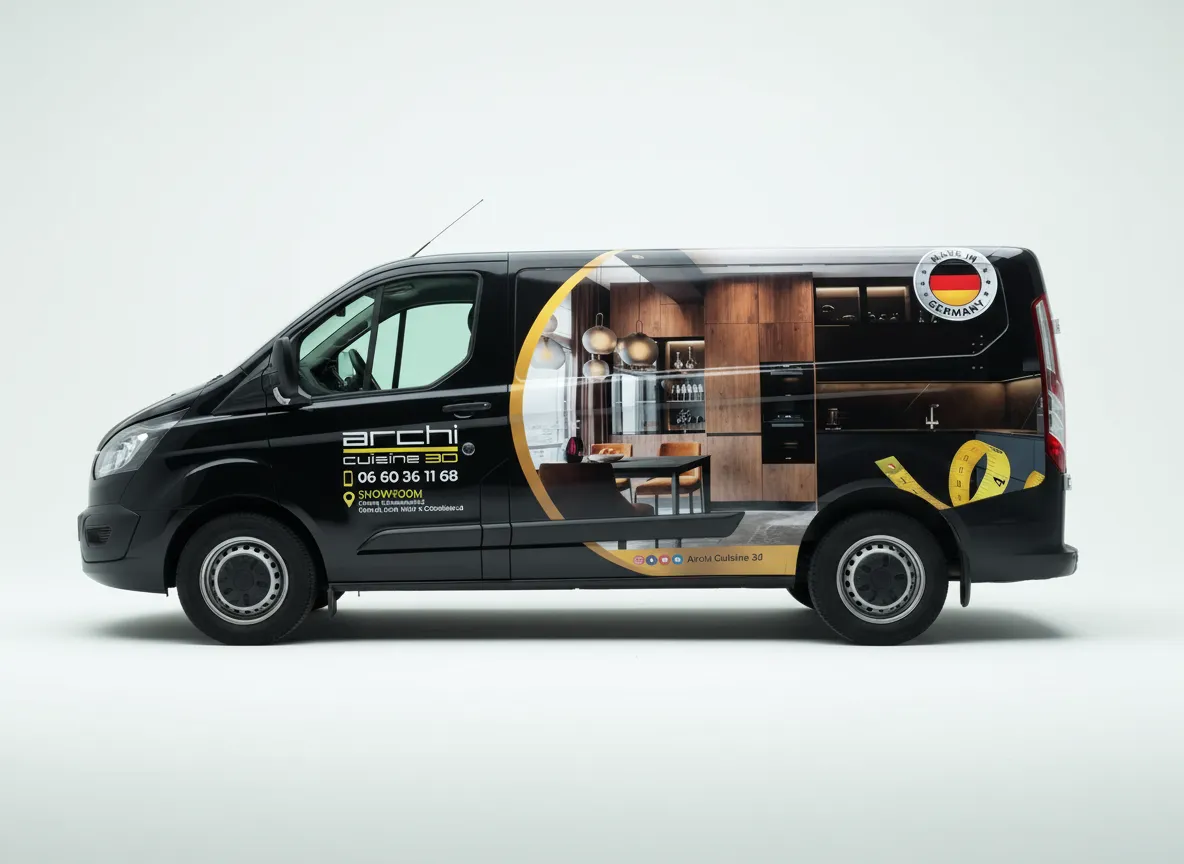
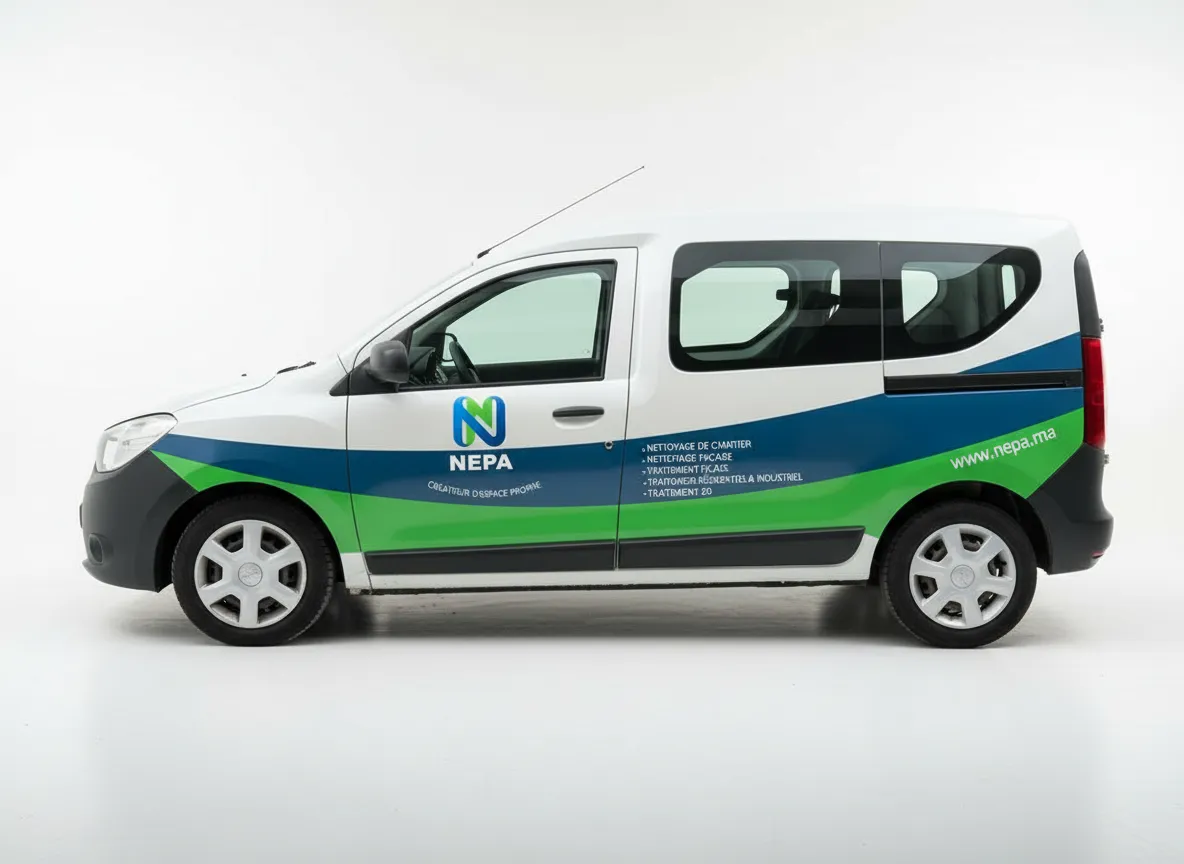
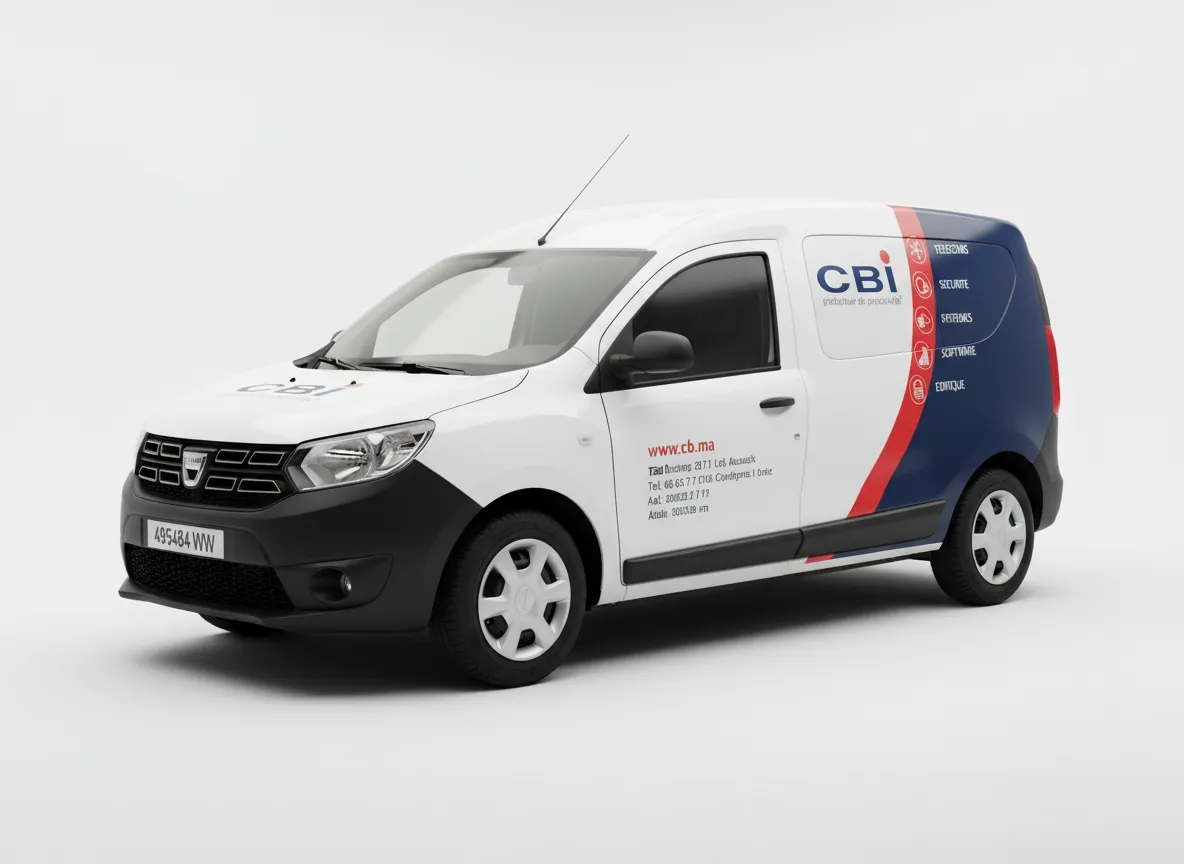
For a fleet, a partial wrap often gives the best balance of visibility and budget: with a well-planned design, the vehicle is recognisable from a distance without covering the whole body.
How long does a vehicle wrap last?
It depends on the film and on sun exposure.
- Cast vinyl is thin and stable: it follows curves, recesses and rivets without shrinking back. Manufacturers often quote 5 to 7 years for cast film on vertical surfaces in a temperate climate. It is the film for full wraps and complex bodywork.
- Calendered vinyl is thicker and cheaper. It suits flat surfaces (truck sides, panels) and usually lasts less, often 3 to 5 years.
- Laminate: printed film needs a clear protective overlaminate that blocks part of the UV and resists scratches. Without it, colours fade quickly.
In sunny climates such as Morocco and West Africa, heat and UV shorten those figures, especially on horizontal surfaces (roof, bonnet) that take the sun head-on. For a fleet that runs all year, laminated cast film is the safest choice.
How much does a vehicle wrap cost?
There is no single price: a serious quote depends on seven things.
- Vehicle size: car, van, truck or bus.
- Coverage: lettering, partial or full.
- Film type: cast or calendered, with or without laminate.
- Bodywork complexity: curves, rivets, handles and bumpers take longer to wrap.
- Graphic design, if you do not have one yet.
- Number of vehicles: across a fleet, the same design and template lower the cost per vehicle.
- Removal of an old wrap, if there is one.
To compare two quotes, check that they state the film brand and type, the laminate, the areas covered, installation and any removal. A price gap almost always comes from one of these points.
How long does it take to install a wrap?
As a guide, for a vehicle in good condition:
- lettering takes a few hours;
- a partial wrap takes about a day;
- a full van wrap usually takes one to three days, including preparation and finishing.
Add the time to print the film and let it dry before installation. For a fleet, schedule the work in batches so that your vehicles never all stop at once.
Can you wrap a vehicle with damaged paintwork?
Not without repairs. The film follows every flaw: dents, deep scratches and rust stay visible under the vinyl. On resprayed or weak paint, removing the film later can also lift the paint. Have the bodywork repaired first: the result will be clean and the film will come off properly.
Is it legal to wrap a company vehicle?
Vinyl wrapping is common practice in Morocco and elsewhere. Check three points before installation:
- windows: the windscreen and front windows must stay clear for the driver's view; perforated film goes on the rear windows;
- colour change: if the wrap changes the vehicle's colour entirely, check whether the registration document needs updating;
- leased vehicles: on long-term rental or lease, get the leasing company's approval.
How do you look after a wrapped vehicle?
- Wait a few days after installation before the first wash.
- Wash by hand or with a pressure washer held well away from the film edges.
- Avoid hard-brush car wash rollers and abrasive or solvent-based products.
- Remove bird droppings, tree sap and fuel spills quickly.
- Park in the shade when you can.
How do you get a fleet wrap right?
- A design that reads on the move: a large logo, one short message, a phone number or web address that is easy to remember. A vehicle is seen for a few seconds, often from far away.
- Exact templates for each model: make, model and year, so the design lands correctly on every vehicle.
- The same film and print run for the whole fleet, so colours match from one vehicle to the next.
- Installation in batches, so the business keeps running.
- Clean removal at the end: good-quality film comes off without damaging the paint, which protects resale value.
LeadAd produces full and partial wraps, vinyl lettering and flock on vans, trucks, food trucks and buses, with teams that travel across Morocco. See our work or ask for a quote with the vehicle models and the number of vehicles.
Equipping a stand or a shop as well? Read our guide to roll-up banner sizes.